
1. How to Structure Email Content
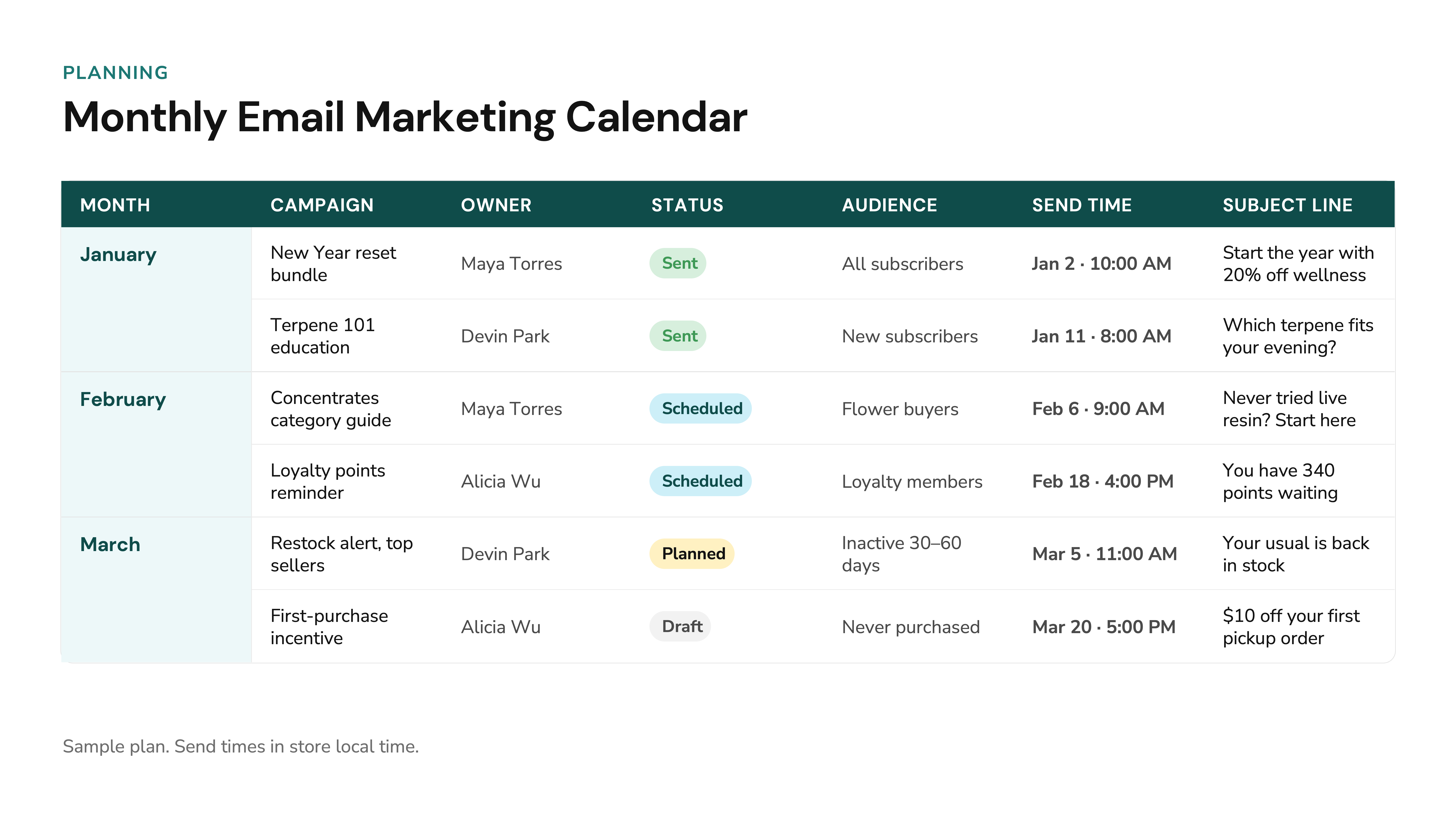
A. Define content topics based on customer stage and behavioral needs, and build a clear monthly structure before launching campaigns.
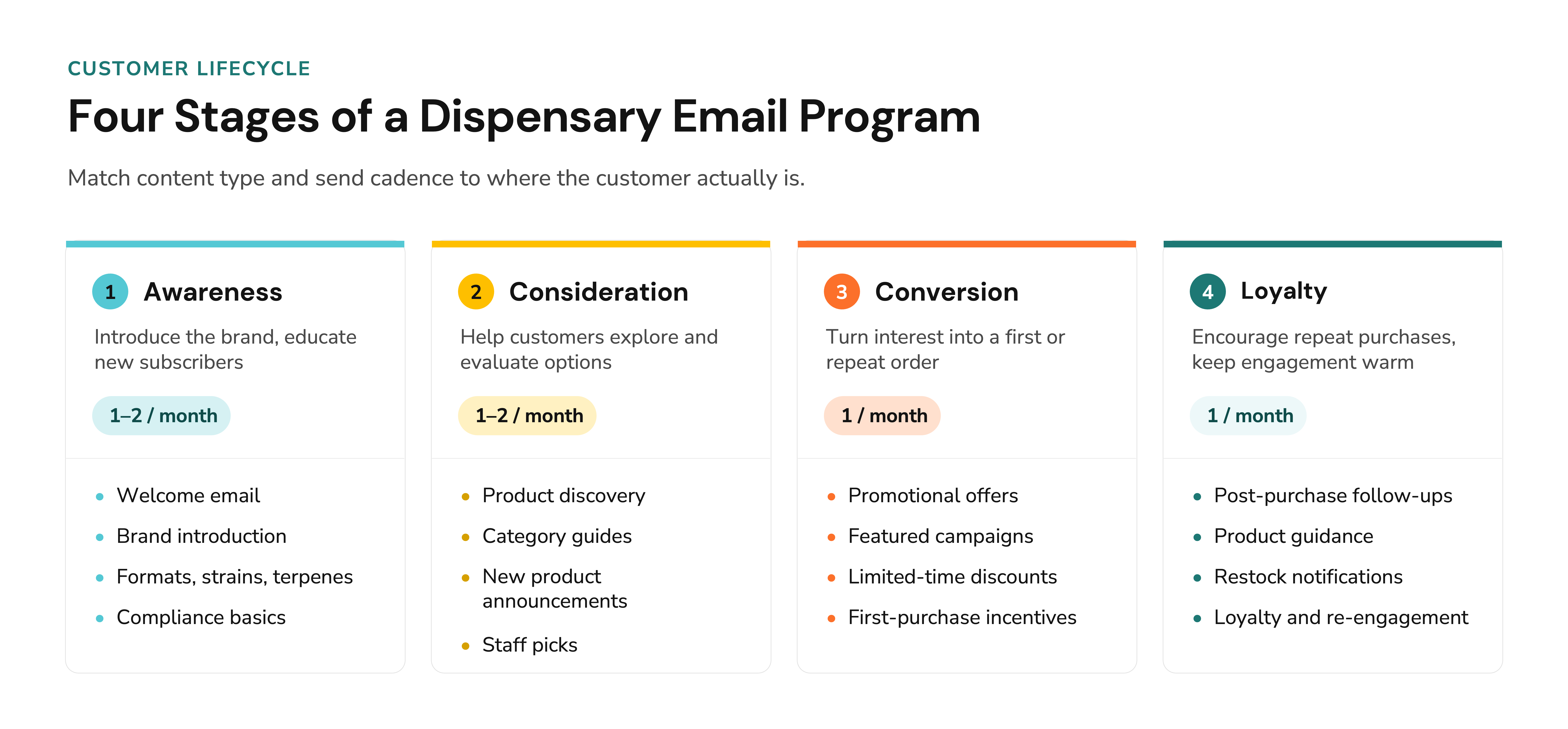
B. Separate communication streams for new subscribers, first-time buyers, repeat customers, and inactive users to ensure relevance.
C. Balance the content mix across educational materials, product updates, regulatory information, and promotions. Avoid building the program around discounts alone.
D. Keep promotional emails to 25–35% of the total monthly volume, using educational, trust-building communication as the foundation for long-term retention and brand authority.
2. How Often to Send Emails
A. Maintain a predictable cadence. A practical monthly structure may include 3–4 emails, for example:
- Two educational messages,
- One product overview or new arrivals update,
- One sales-focused campaign (within compliance limits).
B. Avoid daily campaigns and high-frequency promotional messaging, as excessive volume may reduce engagement quality and increase unsubscribe and spam tagging rates.
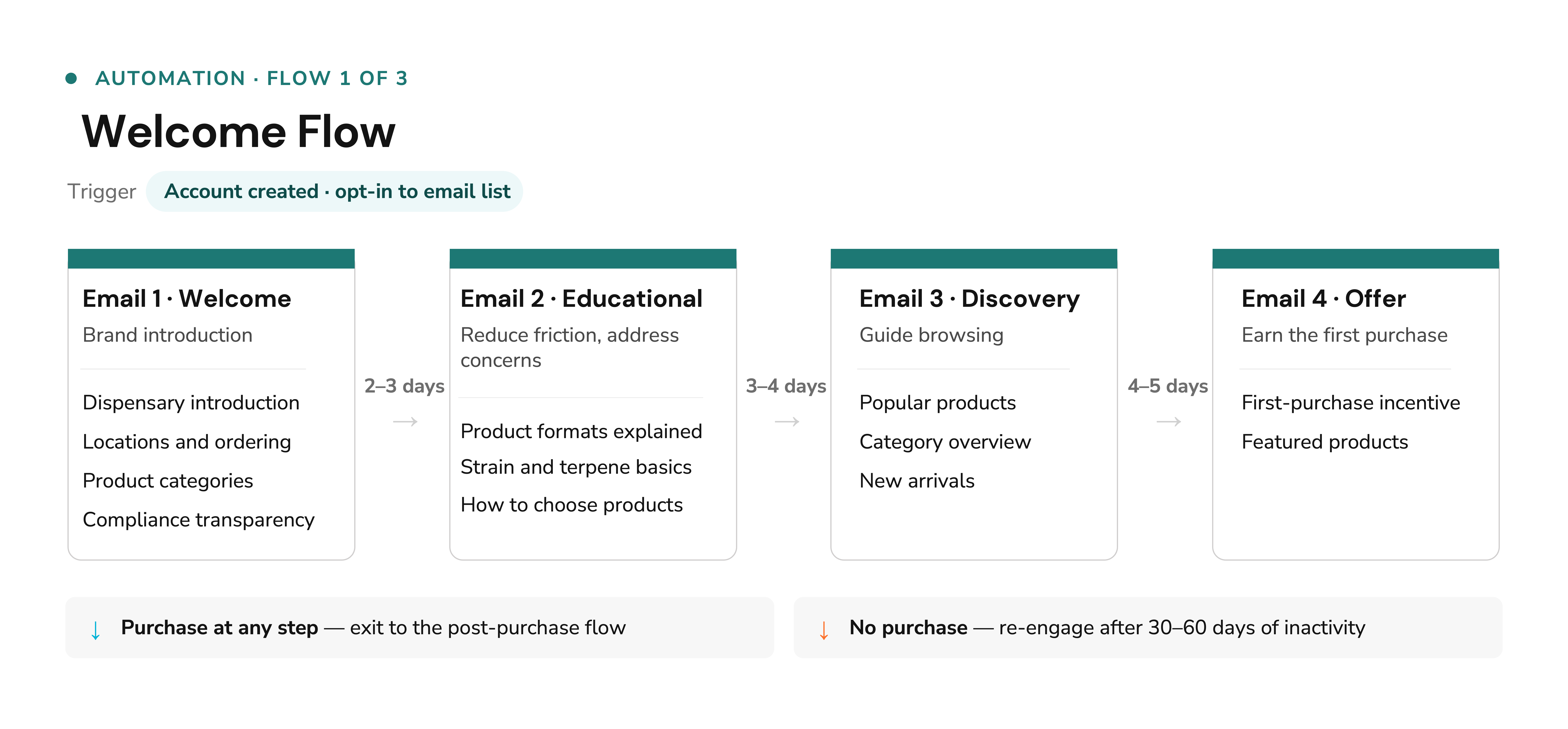
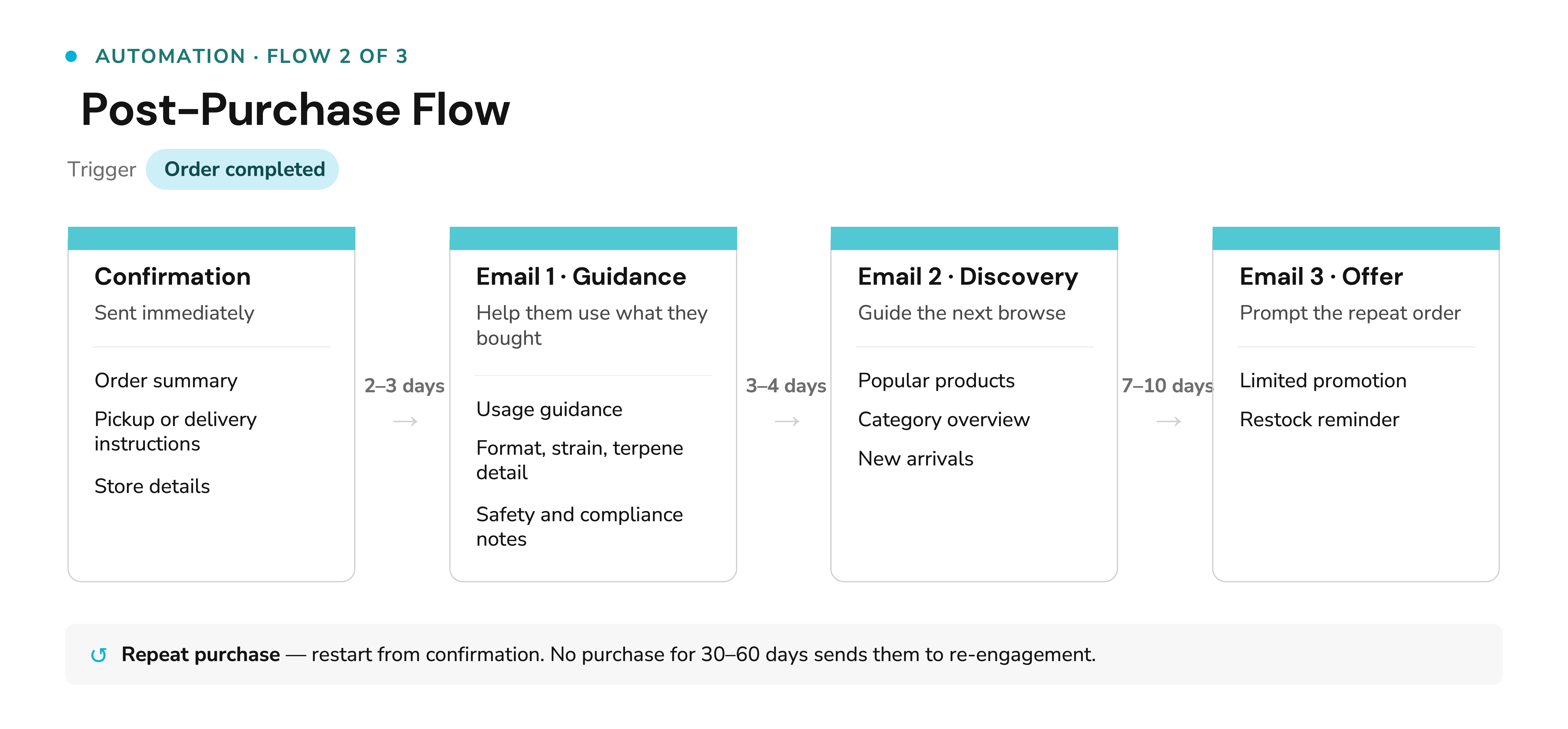
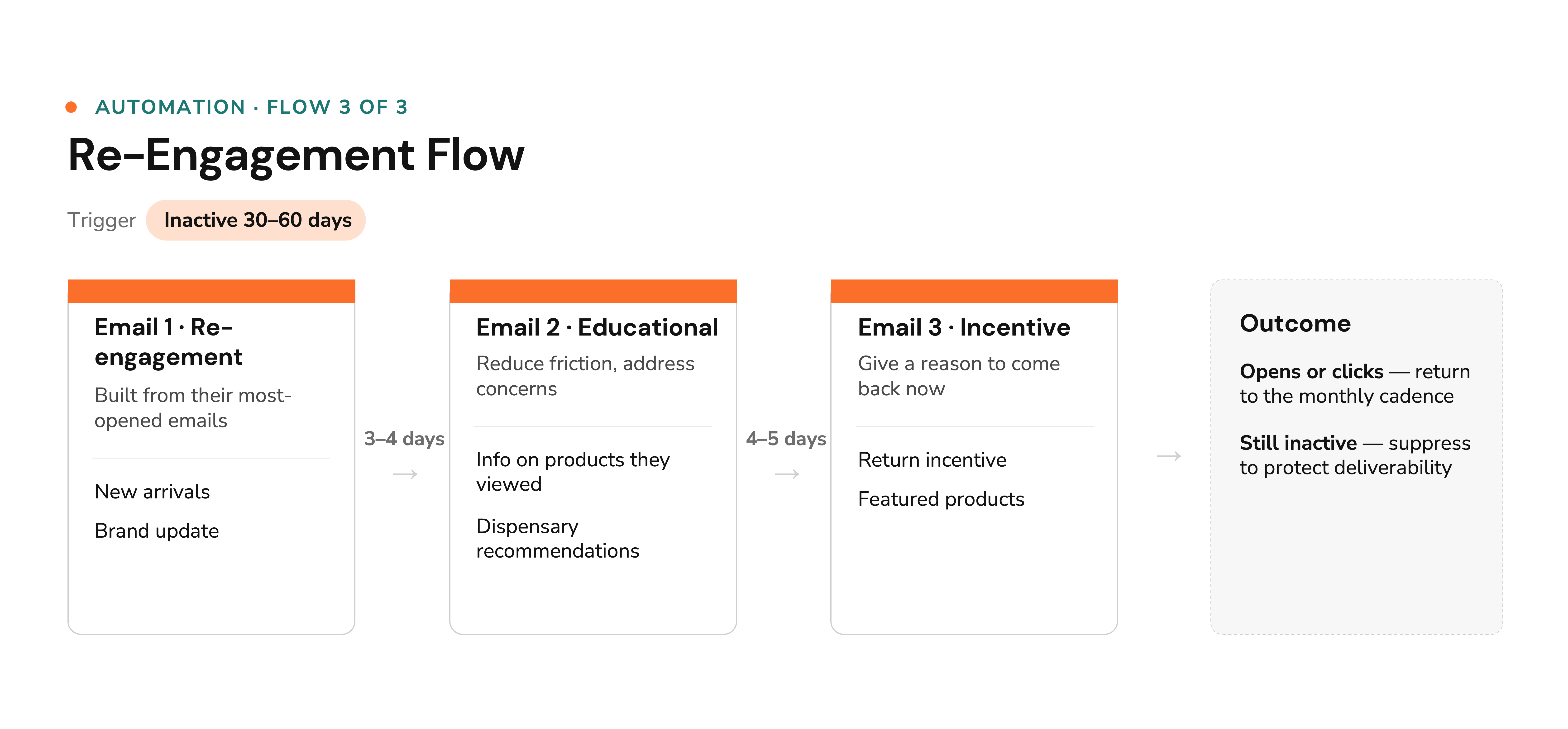
C. Set up evergreen automated flows triggered by a specific event, configured once and optimized over time, including:
- Welcome sequences,
- Post-purchase follow-ups,
- Re-engagement campaigns,
- Product launch or restock notifications.
Automation will reduce reliance on repetitive mass promotions.
3. How to Improve Copy and Design for Better Conversions
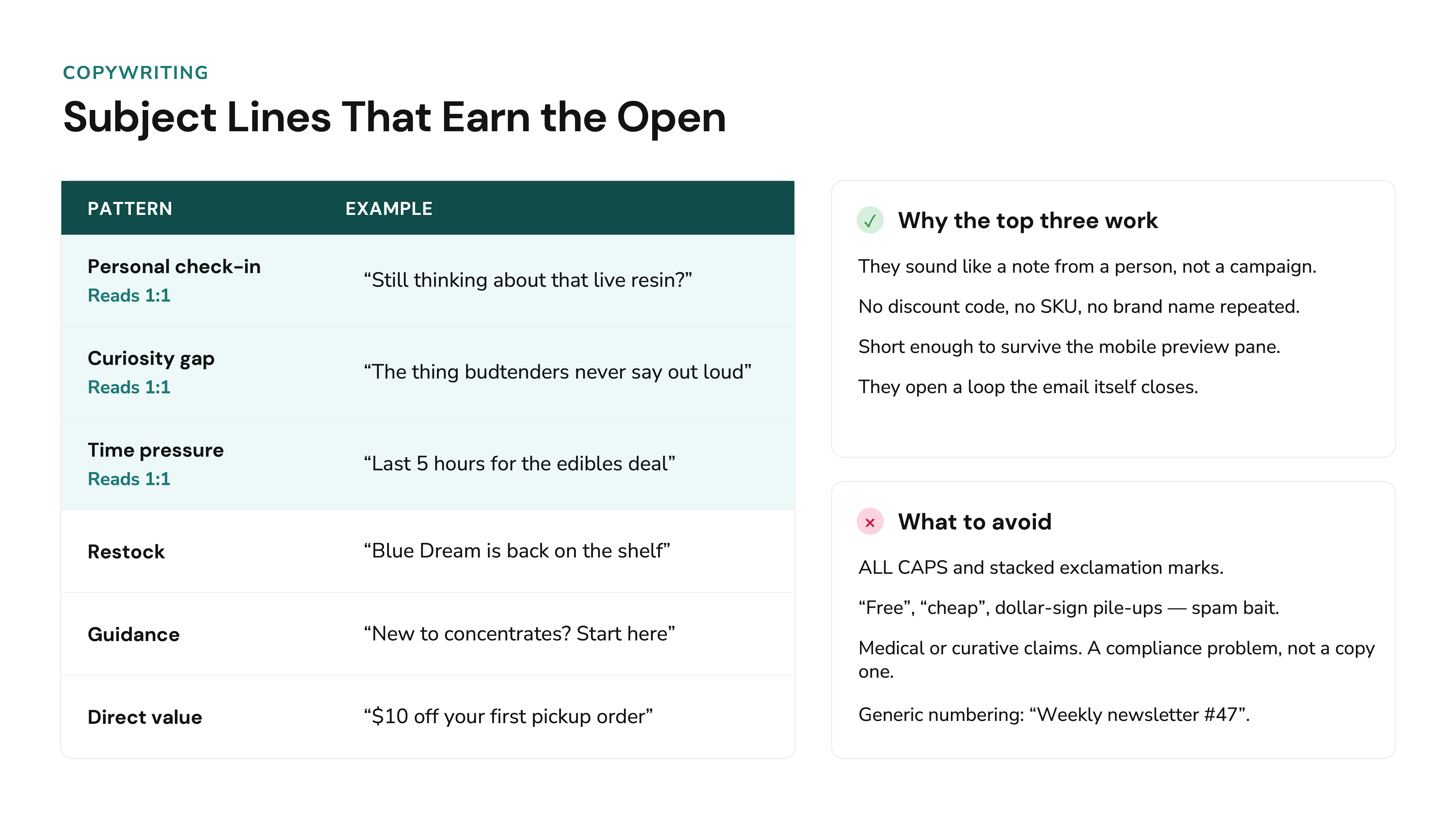
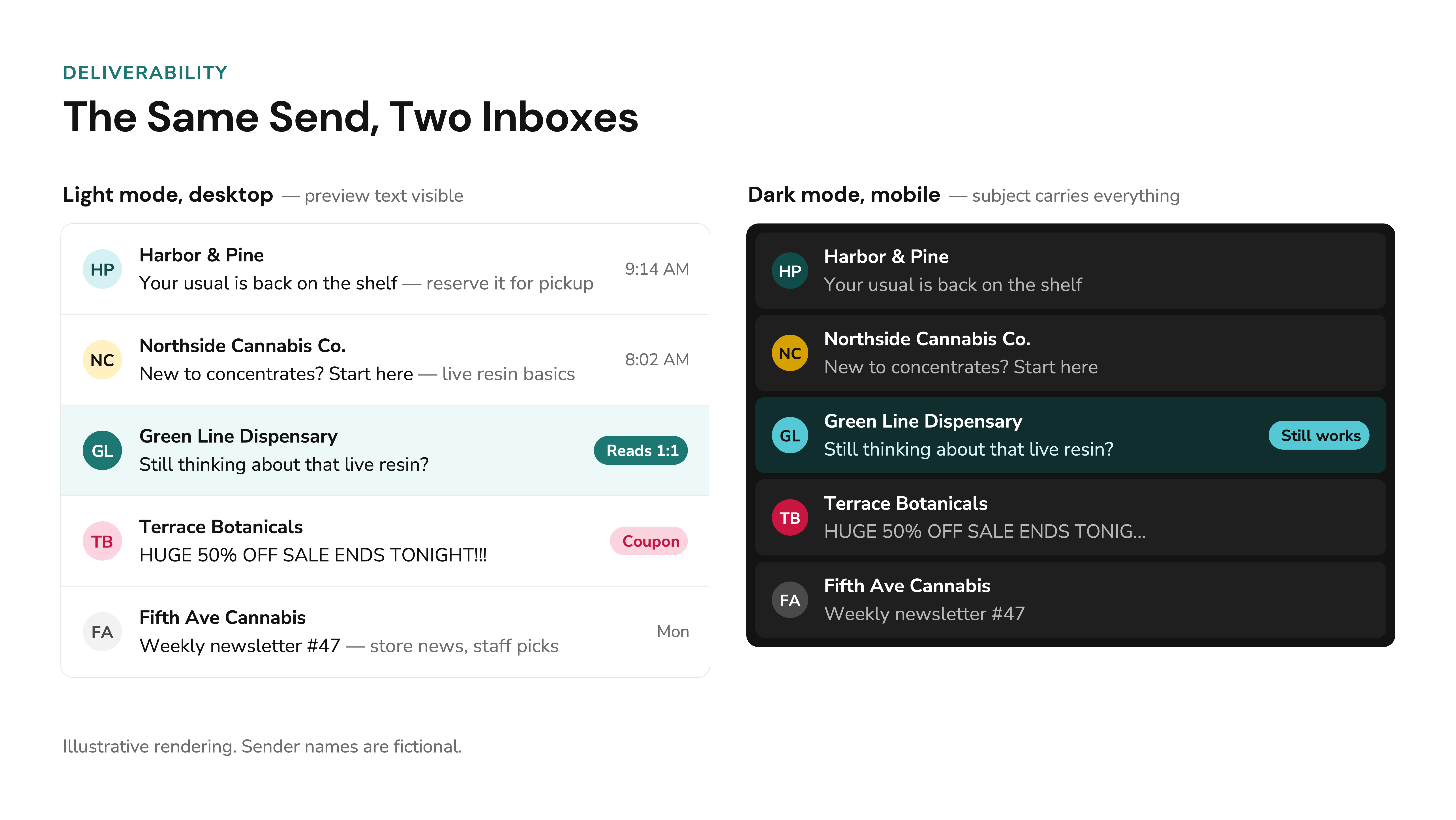
A. Optimize subject lines within 28–40 characters for mobile visibility. Prioritize clarity and relevance, limit excessive numbers and emojis, and avoid exaggerated cannabis claims.
B. Conduct A/B testing to evaluate the performance of different subject lines.
C. Keep email copy concise and structured, placing key information at the beginning, maintaining one core idea per paragraph:
- Less structured approach:
"Spring has arrived, and the team has prepared something special this month. Many customers have been asking about new strains and fresh arrivals…" - Structured approach (key message first):
"New indica strains now available in-store. Limited quantities for this week." Followed by: short explanation of strain profile, terpene highlights, availability window, and store details.
D. Use different format lengths depending on the objective (short announcement, product-focused message - medium, or educational format - long).
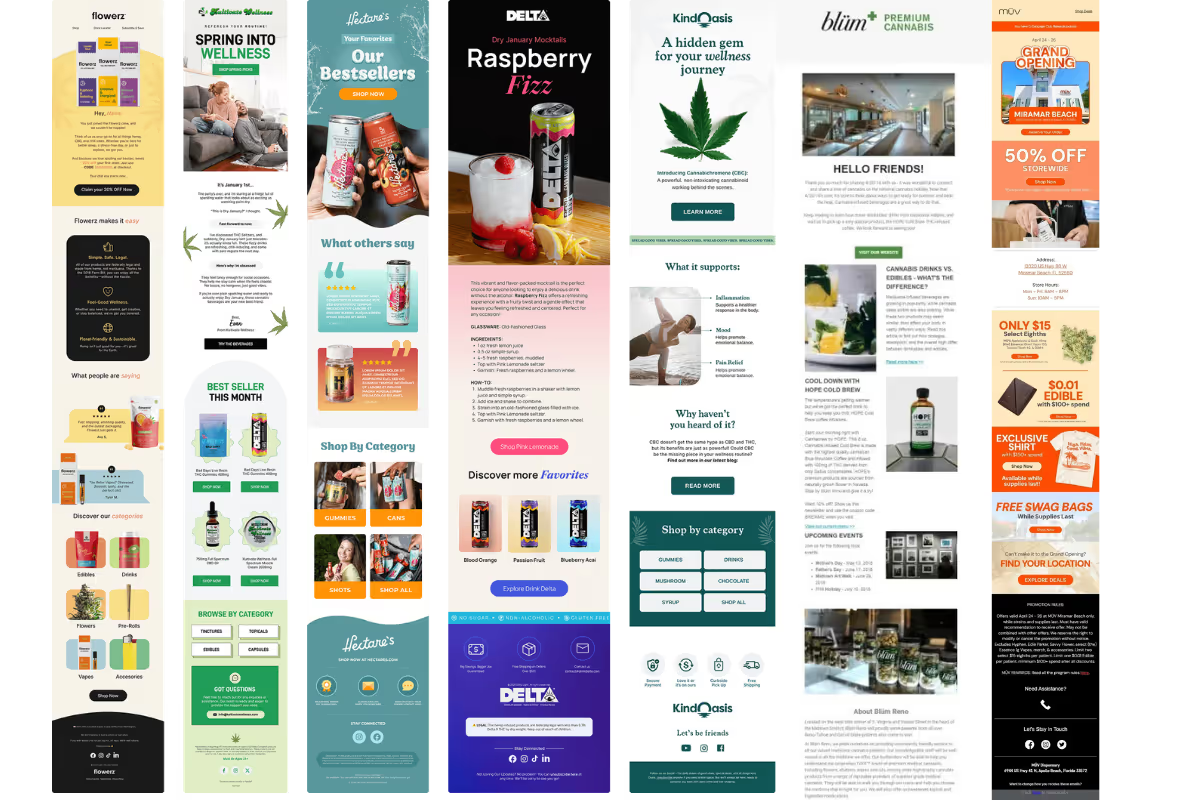
E. Develop consistent branded templates for different email types (promotional, educational, transactional). Visual consistency increases recognition and reduces cognitive load.
.avif)
F. Maintain a clear visual hierarchy with structured sections and defined calls to action.
.avif)
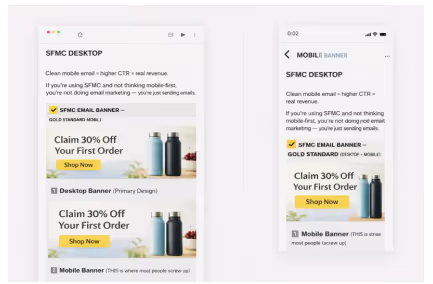
G. Ensure mobile responsiveness, including readable fonts, appropriate button sizing, and optimized images. In the U.S. retail and eCommerce sectors, 60–70% of email opens occur on mobile devices, making smartphone optimization a primary performance factor rather than a secondary design consideration.
Want to take a more structured approach to email marketing? Book a demo to learn how Sweed can help.


-Cannabis-Retail-Dispensary.svg)
%201.svg)