Promotions are no doubt a great tool for attracting more customers and driving sales for such a price-sensitive niche as cannabis. You can create variable campaigns tailored to a particular audience or event to incentivize sales and improve loyalty.
Let's say you launch a 15% discount on the second item in the cart for April to encourage customers to add one more product. At the same time, there may be an ongoing Buy 3, Get 1 Free deal on pre-rolls. Your loyalty program is offering double points this weekend, and medical customers receive an additional discount on Tuesdays.
Each promotion is easy to manage individually. But once you start adding more, tailoring them for audience segments and extending timelines, it turns into a jigsaw puzzle. Which discount actually applies? Is your best-selling product discounted twice? And perhaps the most important question: which promotion is actually driving sales? This is where many dispensaries hit an operational bottleneck.
Why Promotion Strategy Can Break Down
Many dispensary owners initially treat promotions as a simple tactic: lower the price, increase traffic, measure immediate results, repeat if it worked. But promotions influence far more than daily sales. A well-planned promotional strategy can shape customer behavior, inventory flow, and long-term revenue patterns. Poorly coordinated promotions can unintentionally erode margins or train customers only to shop when discounts appear.
The other big problem is that most dispensaries don't lack promotional ideas (actually quite the opposite). What they lack is clear visibility into how those promotions interact over time. A typical workflow often looks like this: Promotions are planned in a spreadsheet → Marketing teams discuss campaigns separately → Discounts are then configured in the POS or eCommerce system. By the time the promotions go live, the original plan may already be out of sync. This fragmented process creates several problems:
- Promotions accidentally overlap.
- Campaigns run outside their intended timelines.
- Teams lose visibility into which deals are currently active.
In larger organizations, teams often juggle 3–5 different tools for planning, scheduling, executing, and analyzing promo campaigns. Multiple team members may create promotions simultaneously, leading to overlaps due to planning complexity and deep segmentation.
For smaller teams, the opposite problem appears: promotions are launched spontaneously because there isn’t a clear planning structure. Either way, the result is the same. Promotions exist, but they are not properly orchestrated.
Steps for Building a Successful Promotion Strategy for a Cannabis Dispensary
A good promotion strategy does not necessarily mean running more promotions. It means designing them so they work together rather than compete with each other. Below are several practical principles dispensaries use to keep promotional activity effective and manageable.
1. Define the Audience and the Goal Before Launching a Promotion
Before creating a promotion, ask a simple operational question: What behavior should this promotion change? Because different promotions solve different dispensary challenges:
- Increase basket size → Second-item discounts or bundle deals across categories like flower + pre-rolls
- Move slow inventory → Category-specific discounts on older batches or slower-selling SKUs
- Encourage repeat visits → Second-purchase incentives or return-in-7-days offers
- Reward loyal customers → Loyalty point multipliers or member-only discounts
For example, if customers typically purchase a single vape cartridge per visit, a "second vape 20% off" promotion may increase average ticket size.
When the goal is clear, it becomes easier to evaluate whether the promotion worked. Otherwise, promotions risk becoming routine discounts rather than targeted tools.
Segmenting promotions by audience also helps protect margins. For example, a promotion aimed at medical patients, loyalty members, or first-time visitors rewards valuable customers without reducing prices for everyone.
2. Plan Promotional Activity Ahead of Time
Promotions are most effective when they follow a predictable rhythm rather than appearing randomly. As a rule of thumb:
- Small dispensary teams often plan promotions one month ahead.
- Multi-location dispensaries typically plan one to two quarters in advance.
Planning allows you to coordinate promotions with inventory cycles, brand partnerships, and seasonal demand patterns. Having this timeline visible helps avoid situations where multiple promotions are launched simply because there was no clear plan for the month.
For example, many dispensaries intentionally align promotions with:
- New product drops from brands or cultivators
- 420, Green Wednesday, or holiday weekends
- Inventory rotation for flower batches
- Customer traffic spikes, such as payday weekends
3. Prevent Overlaps Before They Happen
One of the most common operational issues with promotions is unintentional stacking.
For example:
- A 20% edible discount overlaps with a bundle promotion that already includes edibles.
- A loyalty discount stacks on top of a vendor-funded brand promotion.
- A category promotion on pre-rolls overlaps with a multi-pack deal.
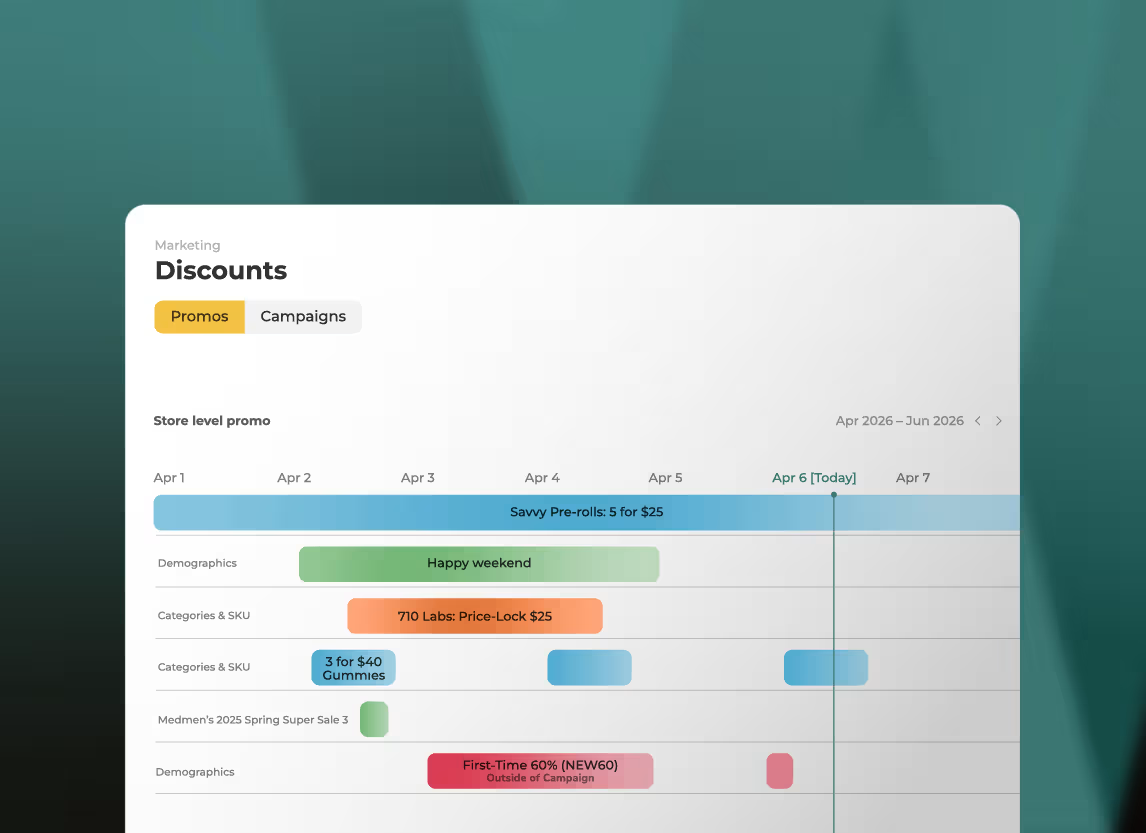
This often happens because promotions are reviewed individually rather than as a timeline. Many dispensaries use Gantt diagrams in spreadsheets or build promotional calendars with third-party tools to visualize activity over time.
Within Sweed, dispensaries can use the Promo Planner to achieve the same visibility. The planner provides a calendar view alongside the standard promotions table, allowing teams to see all promotions and campaigns across a chosen time frame — whether that’s a day, month, or quarter— with the ability to navigate swiftly between them. Because promotions are displayed visually on a timeline, it becomes much easier to spot when two promotions collide or when a new promotion might unintentionally stack with an existing one.
4. Reduce the "3T Gap": Time, Team, and Tools
Promotions often become difficult to manage because the work is split across different systems and teams. For example:
- Marketing plans the promotion in a spreadsheet.
- Operations configure it in the POS.
- Store managers communicate daily specials to staff.
- Analytics teams track performance separately.
When planning, configuring, and monitoring promotions occur within the same environment, teams can make adjustments more quickly and reduce operational friction. When working in Sweed, dispensaries can create, review, and manage promotions, operate their POS within the platform, and eliminate this time–team–tool gap.
5. Build a Hierarchy to Oversee the Full Promotional Landscape
Thinking in terms of campaigns rather than isolated promotions helps bring structure to your dispensary marketing activities. A campaign can act as the overarching theme or goal, while several promotions support it. In practice, this can look like:
Summer Cannabis Campaign, contains:
- 4th of July weekend flower discount
- Mid-July vape cartridge bundle promotion
- End-of-month BOGO deal on pre-roll multipacks
Within Sweed, campaigns can be used as containers to group related promotions. When viewing the activities in Sweed Promo Planner, you can switch between high-level campaigns and promos within them and see how different promotions relate to each broader marketing initiative. The platform also color-codes promotions by type for easier navigation and flags those that fall outside the intended campaign timeline, helping teams keep the structure aligned.
These solutions make it easier to answer questions:
- Are we discounting flower too frequently?
- Are edibles promotions cannibalizing vape sales?
- Are we leaving large gaps without promotional activity?
The dispensaries that benefit the most from promotions are rarely the ones running the deepest discounts. They are the ones running the most coordinated ones.
Example Dispensary Promo Calendar (April–June)
This calendar balances traffic-driving events (4/20, Memorial Day), inventory rotation (flower week), customer retention (loyalty incentives), and basket-building promotions (cart discounts and bundles).
Bring More Structure to Your Promotions with Sweed
When dispensaries can see campaigns, discounts, and timelines in one place, it becomes much easier to avoid overlapping offers, coordinate inventory movement, and design promotions that actually support long-term growth.
Tools like Sweed help bring that structure together. Dispensaries can plan and manage promotions with the Promo Planner calendar while running their day-to-day POS operations in the same system.
Curious how it could work for your store? Book a demo with Sweed and explore how the platform can simplify promotion planning and daily operations.


-Cannabis-Retail-Dispensary.svg)
%201.svg)