.avif)
For marketing teams in cannabis retail, a constant priority is finding new ways to drive revenue growth. This means continuously identifying high-impact customer segments and delivering personalized offers that increase conversion, repeat purchases, and customer lifetime value.
Traditional audience segmentation in cannabis retail has relied on manually defined rules and filters, such as recent purchases or past coupon use. These segments can be static or dynamic depending on how often they refresh, but they remain rule-based and descriptive, focused on classifying customers based on past or current attributes.
Today, the industry is shifting from this approach to behavior prediction, which uses customer actions and signals to anticipate intent. Sweed built predictive segments based on expected customer behavior, grouping customers by their likelihood to take a specific action. This shift moves segmentation from identifying who fits certain criteria to identifying who is most likely to act next, enabling more precise timing, faster execution, and incremental revenue growth without increasing discounts.
Introducing Behavior Prediction–Based Segments
What Are Predictive Segments?
Predictive segments are customer audiences built on behavioral signals to predict the most likely next action a customer will take—such as making a purchase, redeeming a reward, or returning to the store.
Unlike traditional segmentation, which groups customers by predefined filters or static cohorts, predictive segmentation focuses on intent and timing, using observed behavior patterns to anticipate future actions.
Instead of asking, "Which customers meet these criteria?" predictive segmentation asks, "Which customers are most likely to act right now?" This distinction is critical for cannabis retailers, where timing, compliance constraints, and margin sensitivity all affect campaign effectiveness.
How They Differ from Traditional Segmentation
Traditional filters classify customers based on selected conditions or attributes—such as recent visits, total spend, or historical promotion usage. While useful, these filters often require manual setup, ongoing maintenance, and guesswork around timing.
Predictive segments shift this logic by prioritizing expected behavior. Rather than relying on assumptions about what might work, marketers can act on modeled likelihood, triggering campaigns when customers are statistically most receptive. The result is higher conversion with less trial and error.
Core Characteristics
Ready-to-use: Predictive Segments eliminates the need for manual logic, complex rule-building, or SQL queries. They are pre-built based on proven behavioral patterns, allowing teams to launch faster.
Business-outcome-focused: Each segment targets a specific business goal—conversion, repeat purchase, redemption, or reactivation—so performance is tied directly to revenue impact.
Easy to activate: Predictive segments can be deployed across existing marketing workflows, from loyalty messaging to promotional campaigns, without requiring changes to operational processes.
With recent advances in AI and behavior modeling, this approach has become accessible to everyday marketing teams. Predictive segmentation now enables cannabis retailers to move faster, target more precisely, and unlock incremental revenue by acting on customer intent at the right moment.
Four High-Impact Predictive Segments
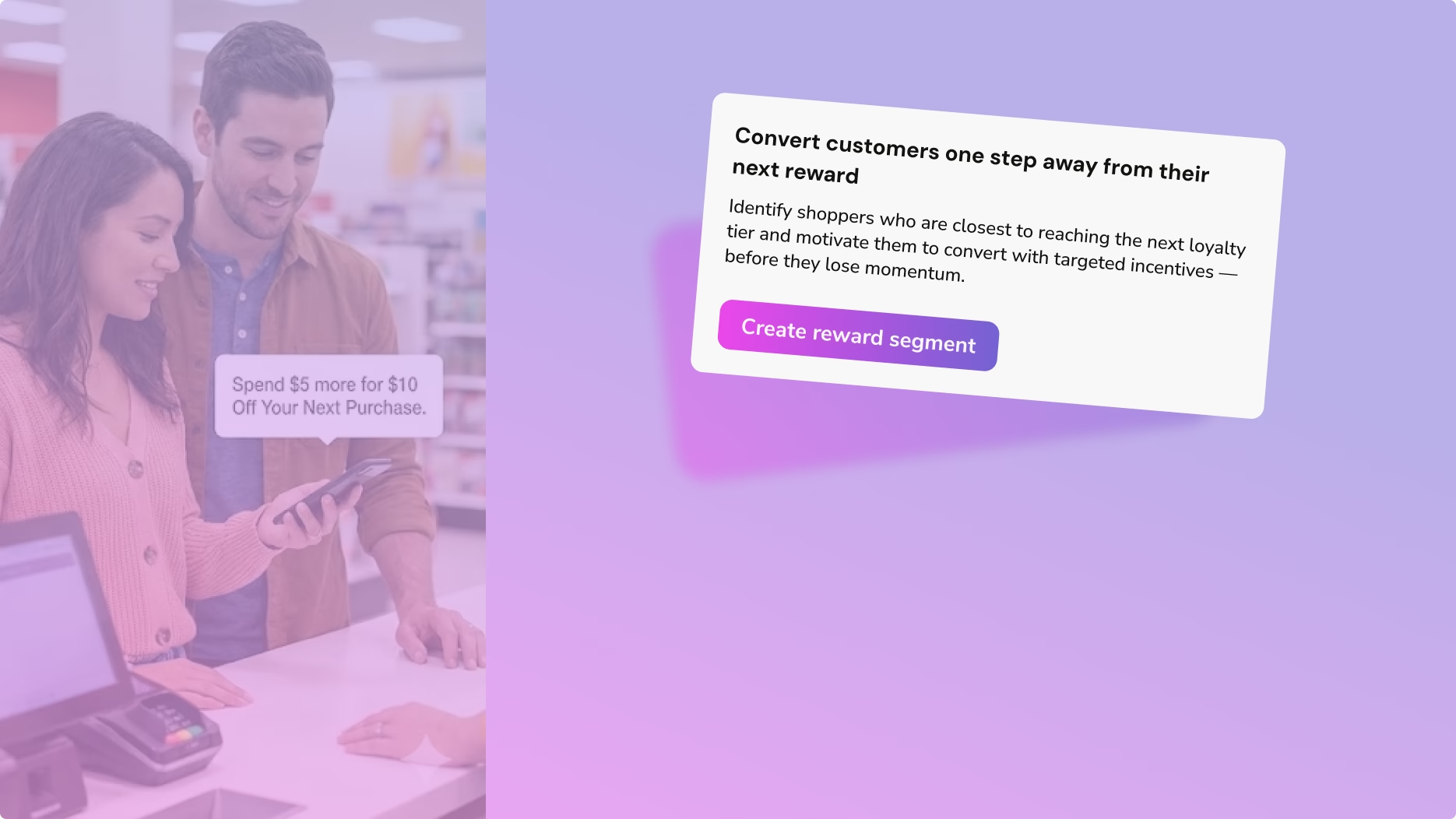
Segment #1: Customers One Step Away from Their Next Reward
Segment Goal: Motivate customers to complete the action needed to reach the next loyalty tier.
Who's in the segment? Customers who are a few points or actions away from the next loyalty level. These customers have already demonstrated strong engagement with the brand. They're participating in the loyalty program and are close to unlocking additional value, but without a timely reminder, they may stall or shift attention elsewhere.
Why does this matter? Motivation already exists; what's missing is a trigger. Timely messaging converts latent intent into action. When customers are close to a reward, even a small reminder can have an outsized impact. Predictive segmentation ensures reminders arrive when customers are most likely to act, rather than after momentum has faded.
Business Impact: Higher repeat purchase frequency, faster loyalty tier progression, reduced drop-off right before conversion.
Typical Use Case: “You're only X points away from your next reward” reminder before peak buying days.
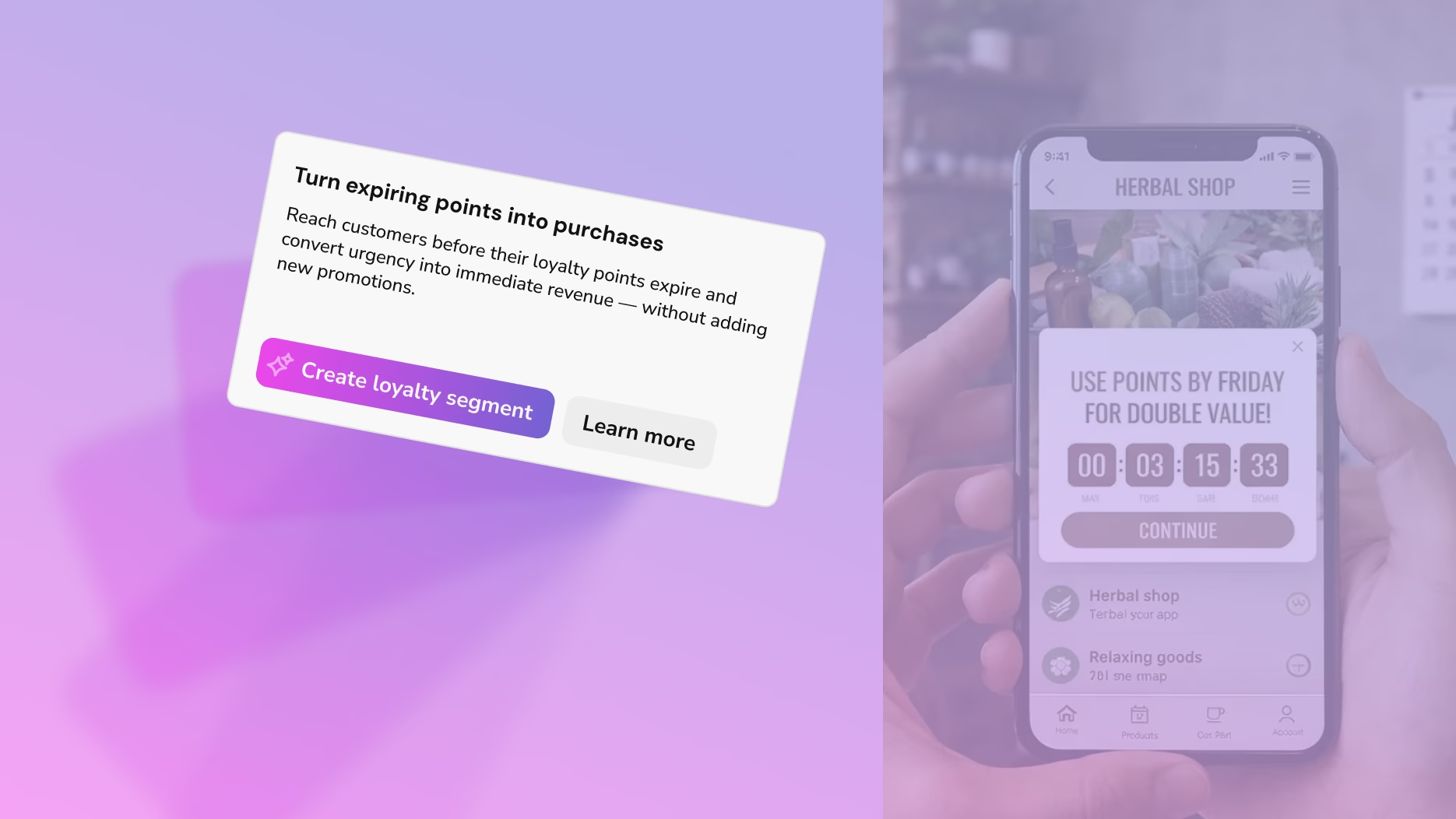
Segment #2: Customers with Expiring Loyalty Points
Segment Goal: Convert expiring value into immediate purchases.
Who's in the segment? Customers whose loyalty points expire in the next few days. Loyalty points represent stored value, but that value only matters if customers remember and use them. Without reminders, many points expire unused, resulting in missed revenue and diminished perceived value of the loyalty program.
Why does this matter? Customers often forget stored value. Expiration creates a natural urgency without discounts. This segment leverages existing urgency. Instead of introducing new incentives, marketers can simply highlight the value customers already have, prompting action without eroding margins.
Business Impact: Converts dormant points into revenue, increases short-term sales without margin erosion, and strengthens the perceived value of the loyalty program.
Typical Use Case: Automated reminder triggered 3–7 days before expiration.
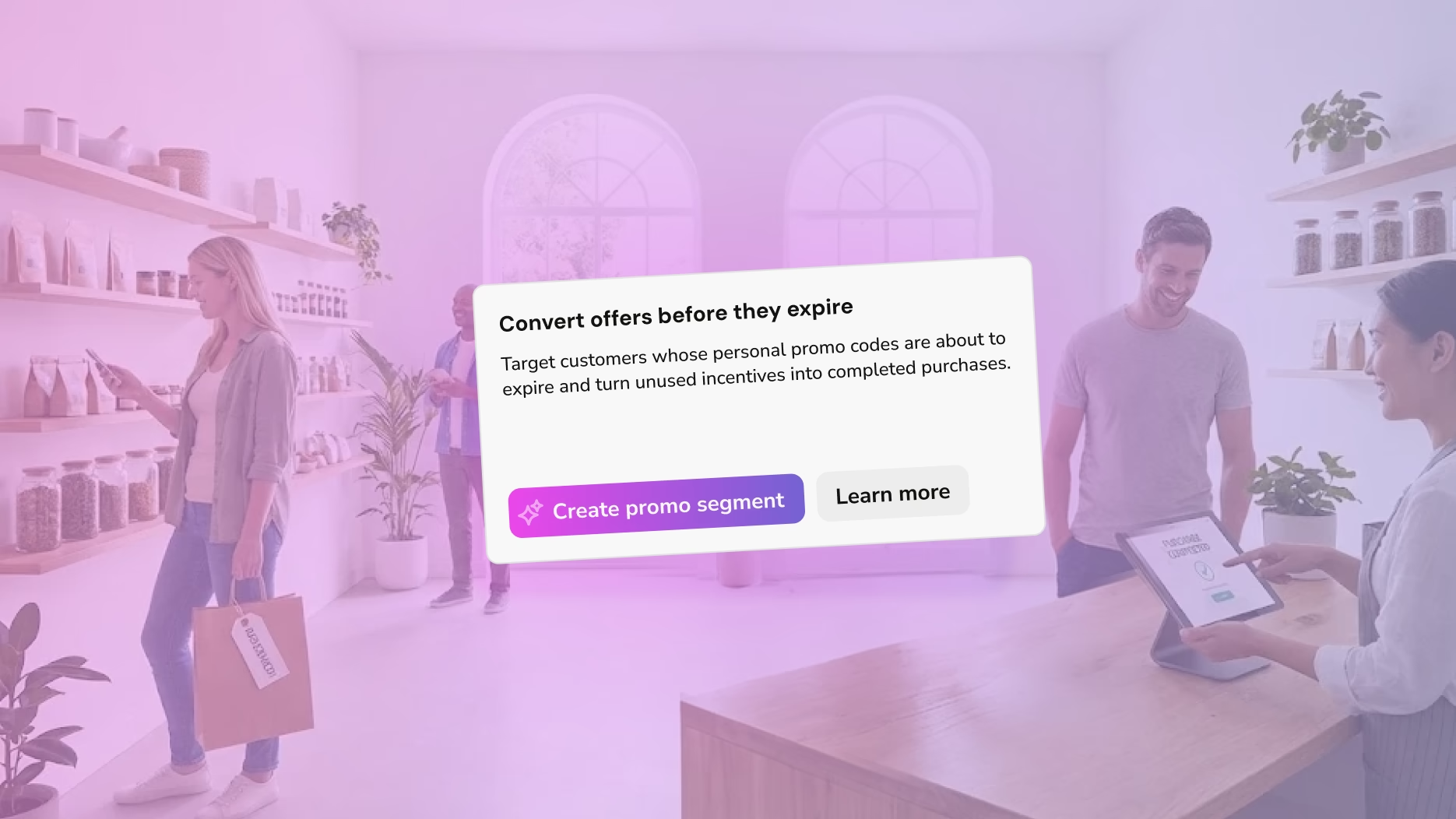
Segment #3: Days to Personal Promo Code Expiration
Segment Goal: Recover missed conversions from unused personal offers.
Who’s in the segment? Customers with personalized promo codes nearing expiration. Personalized promotions aim to drive incremental behavior, but when they expire unused, they represent wasted effort and spend. In many cases, the offer itself isn't the issue. Timing is.
Why does it matter? Personalized incentives are costly when unused. Timing is often the only missing factor. By identifying customers who are statistically likely to convert if reminded, predictive segmentation helps recover value from offers that would otherwise go unused.
Business Impact: Higher promo redemption rates, improved ROI on personalized incentives, and less wasted promotional spend.
Typical Use Case: “Last chance to use your personal offer” message aligned with the customer's usual visit day.
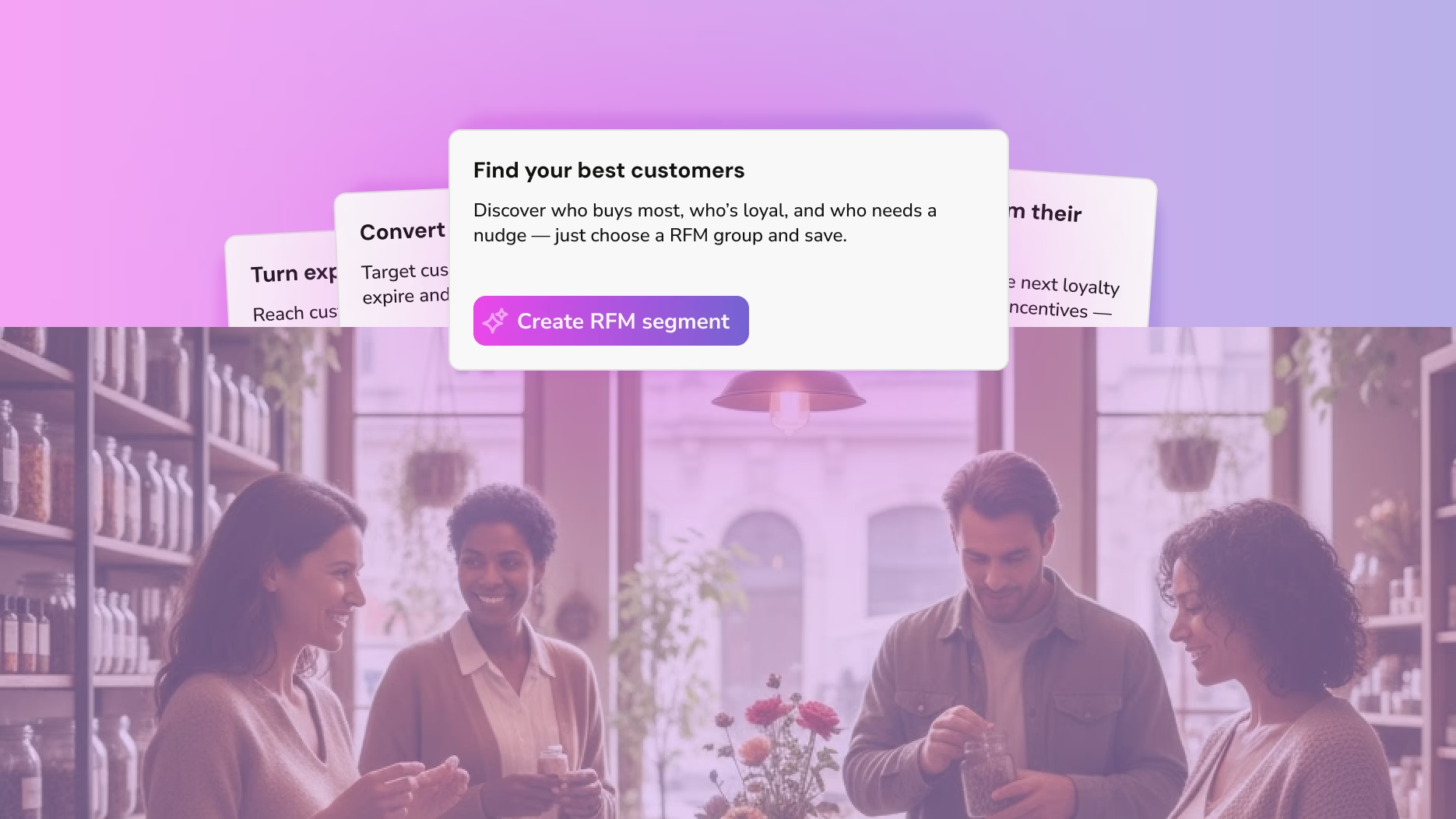
Segment #4: Predictive Recency, Frequency, Monetary-Based Opportunity Segment
Segment Goal: Identify customers with high revenue potential who are at risk of inactivity or ready to re-activate.
Who's in the segment? Customers are scored based on recency (last visit timing), frequency (visit or purchase cadence), and monetary (historical spend), with behavioral prediction (likelihood of return or lapse). Traditional RFM analysis shows who has been valuable in the past. Predictive enhancement adds a forward-looking layer that identifies which high-value customers are likely to disengage or return.
Why does this matter? Classic RFM shows value; prediction shows next steps, helping to prioritize outreach where it actually pays off. Instead of blanket reactivation campaigns, marketers can focus on customers for whom intervention offers the highest expected return.
Business Impact: Reactivates high-value customers before churn, prevents revenue loss from silent drop-off, and improves lifecycle marketing efficiency.
Typical Use Case: Targeted re-engagement for “high value, slipping recency” customers without blanket discounts.
These Segments Could Create “Almost Free” Profit
Predictive segments unlock incremental revenue by improving timing and relevance, not by increasing spend. They use existing customer data, require no new acquisition costs, and add minimal operational overhead.
In a margin-sensitive industry like cannabis retail, revenue growth doesn't always come from bigger incentives; it often comes from smarter, better-timed engagement. Predictive segmentation helps retailers capture that opportunity.
To learn more about how Predictive Segments can help you drive revenue, schedule a call with our team.


-Cannabis-Retail-Dispensary.svg)
%201.svg)