Picture this: A customer browses your online menu, adds products to their cart, and then disappears. This very real situation is particularly frustrating for cannabis retailers because of the financial constraints of the industry, and it can hint at a larger customer experience issue for the business. Specifically, abandoned carts represent a disconnect between your dispensary and a high-intent customer.
The reality is that every dispensary operator is familiar with this experience and understands the pain. Therefore, the question isn’t whether you have abandoned carts, it’s whether you’re systematically converting these customers instead of leaving revenue on the table. And that’s where automation becomes a growth engine.
What Most Dispensaries Get Wrong
While many operators are actively trying to combat this behavior, their approach is often inefficient, or worse, ineffective.
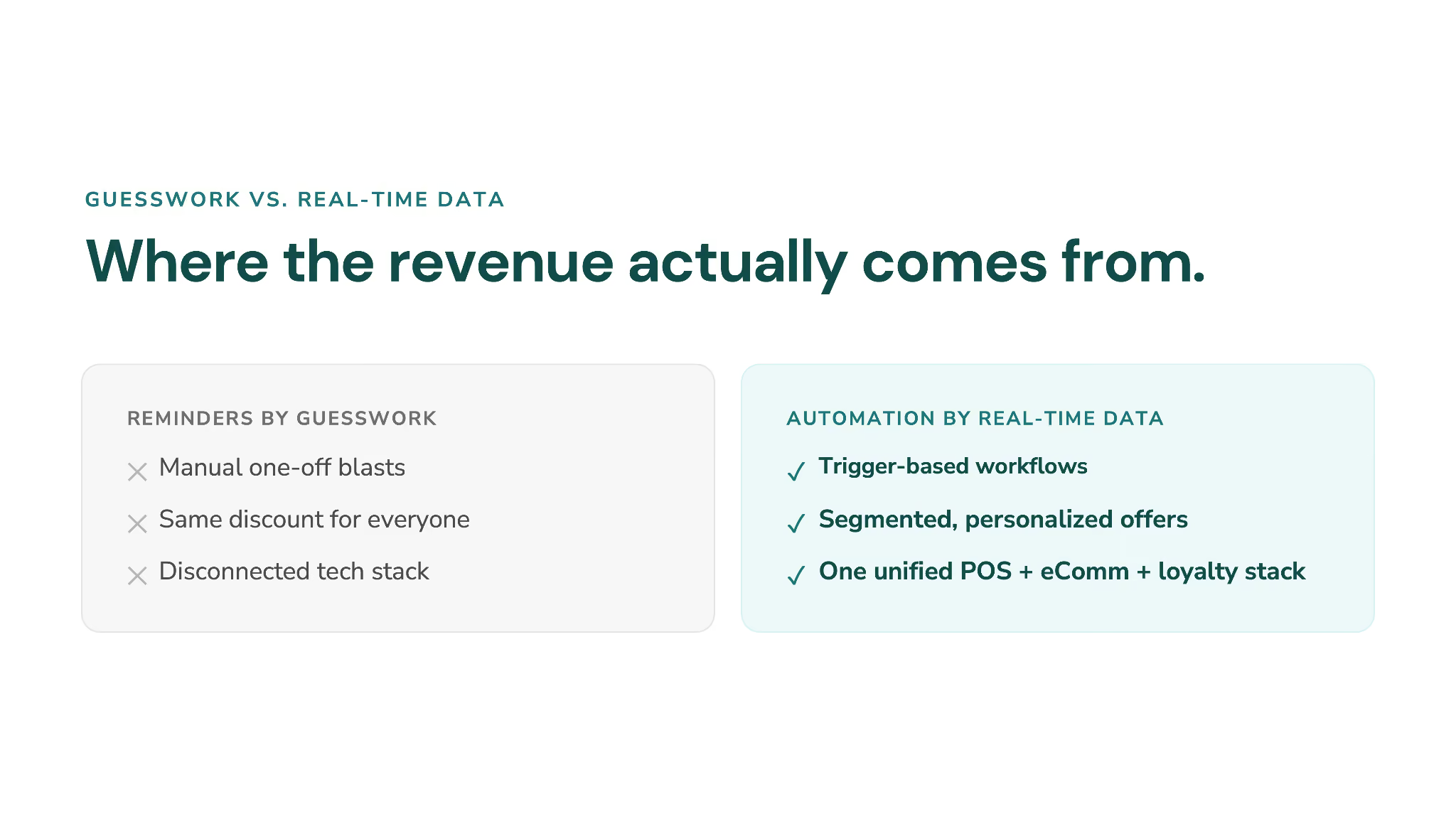
Manual follow-ups, for example, such as sending one-off blasts or generic “Come Back!” emails, don’t scale and don’t speak to what the customers actually want. However, this is the approach many operators take because they lack the tools and data to truly understand their customers and efficiently provide the incentives that will actually drive action.
This same issue applies to all one-size-fits-all messaging, where every customer receives the same discounts, without personalization or segmentation by behavior. It’s often the result of operating with a disconnected tech stack where POS doesn’t talk to marketing, eCommerce doesn’t trigger campaigns, and loyalty data isn’t integrated.
As the industry continues to mature, customers expect personalization and segmentation similar to what they experience in traditional retail – industries that leverage their tools to integrate personalization into every part of the customer journey.
The reality is that real revenue comes from automation powered by real-time data, not reminders powered by guesswork.
Increasing eCommerce Conversion With Intelligent Recovery
It’s easy to write off an abandoned cart as someone who simply wasn’t interested. But the reality is that when customers don’t take the final step to make a purchase, it impacts conversion rate, average order value, purchase frequency, and customer lifetime value.
Additionally, abandoned carts can signal where your business is losing to the competition, whether due to pricing, discounting, product selection, or something else.
Paying attention to abandoned carts and making a strong effort to win back customers who have demonstrated intent is critical.
Operational Impact: Why This Matters Beyond Marketing
It’s easy to view abandoned cart messaging and workflows as just another marketing tool. But when abandoned cart automation is done right, it becomes:
- A revenue lever
- A retention strategy
- A labor-saving tool
- A competitive differentiator
This delivers real benefits to cannabis businesses. It alleviates pressure on budtenders to manually “save” sales and eliminates the need for third-party automation tools.
With one powerful discount engine powering POS, eCommerce, and messaging, the entire team can feel confident that there is no duplicate discount creation across platforms, that discounts are being used effectively and efficiently, and that real results are being generated, without adding to the team’s bandwidth.
How Sweed’s Workflows Turn Abandonment Into Revenue
Sweed connect all parts of dispensary operations so that data and insights speak to each other, making it possible to integrate personalization and segmentation into workflows that don’t require manual babysitting.
Sweed provides dispensary teams with intelligent, data-backed AI tools that help ensure they’re never missing out on business or leaving revenue on the table. Tools such as:
Real-Time Inventory Sync: Eliminates frustrating “out of stock” recovery emails.
Integrated Loyalty Redemption: Allows customers to see and apply points directly at checkout, removing hesitation.
Deal Wizard & BOGO Guidance: Shows customers the deals they may be missing and guides them to bundle products effectively so they feel confident they’re getting the best value every time.
Here are some examples of how the platform works for you:
Automated Trigger-Based Workflows
Sweed understands the cost and frustration that comes with manual campaigns that are tedious to build and prone to error or oversight.
By creating a system that automatically combines POS and eCommerce data, and works across SMS, email, and push, Sweed delivers workflows that all revenue to run in the background.
Here’s how it works:
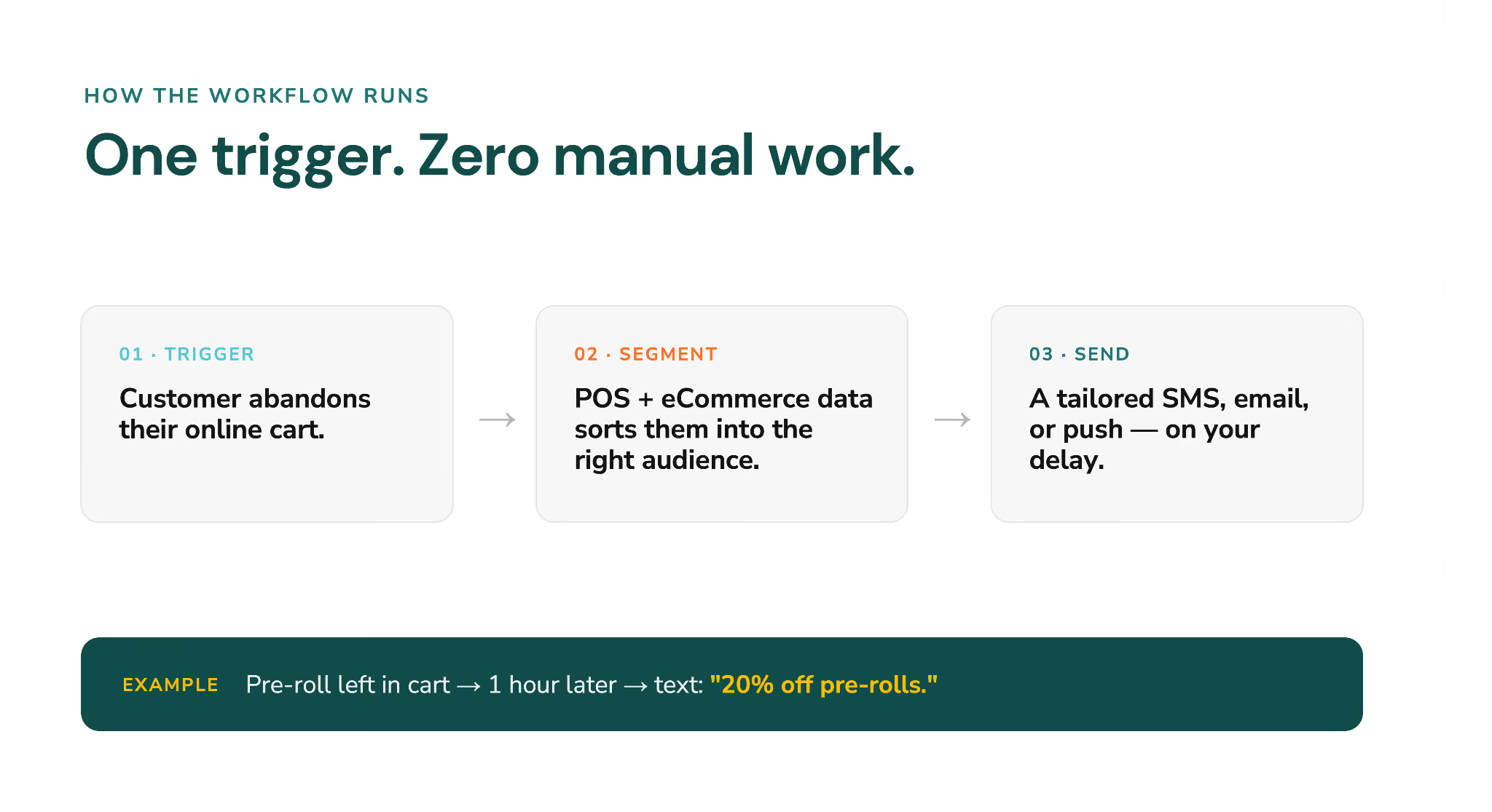
The workflow is triggered when a customer abandons their online cart. Once triggered, the customer is automatically segmented into the audience they best fit. They then receive a message and/or a promo code via SMS, email, or push notification after a delay set by your team (for example: 30 minutes, 1 hour, 24 hours, etc.)
For example: A customer adds a pre-roll to their cart. After one hour without checkout, they receive a text message offering 20% off pre-rolls.
This system is effective because customers are automatically segmented, and conditional logic within the workflow sends different messages based on past behavior and data collected throughout their customer journey.
As a bonus, workflows can automatically generate unique promo codes and attach them to specific customers while allowing the team to limit usage and track attribution. This transforms “10% off for everyone” into targeted conversion recovery.
The best part? This automation is native to your retail stack, not bolted on.
Personalization That Actually Converts
Because Sweed is a native all-in-one dispensary operating system, combining POS, eCommerce, loyalty, and marketing, the messages customers receive are specific to the actions and insights collected from every interaction they’ve had with your business.
Abandoned cart messages can include:
- The exact products left in the cart
- Real-time pricing
- Loyalty balance visibility
- AI-driven product recommendations
- Targeted incentives based on segment
Examples of how customers are already using the Sweed platform to recover revenue:
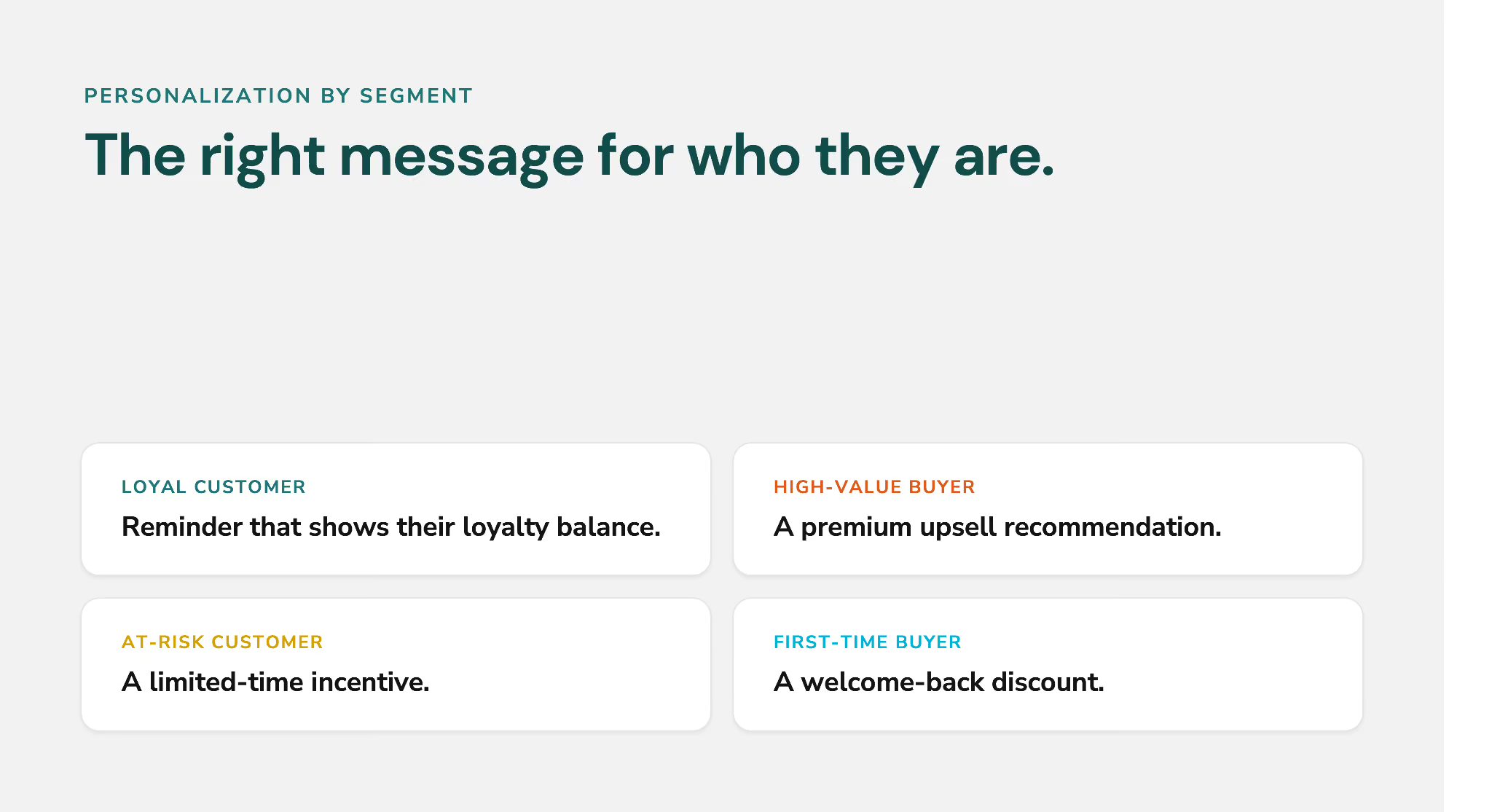
- Loyal customer: Reminder including loyalty balance
- High-value occasional buyer: Premium upsell recommendation
- At-risk customer: Limited-time incentive
- First-time buyer: Welcome-back discount
This is where eCommerce conversion meets behavior data.
Advanced Strategy: Segmenting Abandonment for Higher ROI
Sweed understands that not all abandoned carts are equal.
You may have:
- Someone searching for the best price in the area
- Someone planning to complete their order after payday
- Someone who simply got distracted
Tools such as RFM segmentation consider purchase frequency, spend, and recency to categorize customers and help operators understand what will motivate each segment to complete their purchase.
Using Sweed’s segmentation and dynamic segments, operators can:
- Treat Champions differently than Rare buyers
- Escalate incentives based on recency and frequency
- Suppress discounts for customers who consistently convert without one
- Offer premium bundles to high-spend customers
This is how you protect margin while increasing conversion, delivering incentives that make customers feel seen and understood.
Measuring Real Revenue Impact
While these tools reduce manual workload, dispensary decision-makers care about measurable ROI.
With Sweed, tracking and quantifying performance is automated. Teams can monitor:
- Online vs. offline revenue attribution
- Direct vs. indirect conversion
- Revenue generated by specific workflows
- Promo code usage tied to abandoned cart triggers
- Conversion rate lift over time
These metrics provide something more powerful than any single feature: confidence that marketing is driving dollars, not just clicks.
Real-World Results: What Abandoned Cart Automation Looks Like in Action
These systems aren’t hypothetical, they are real tools dispensaries use every day to generate measurable results.
Here’s an inside look at a dispensary that used Sweed’s abandoned cart workflows to turn high-intent drop-offs into measurable revenue, without adding manual workload to their team.
How Sweed Optimized Operations
This dispensary recognized a gap between customers adding products to their online cart and completing checkout. The issue wasn’t interest, it was follow-up.
They needed a way to:
- Reach customers immediately after abandonment
- Personalize outreach based on cart contents
- Reduce friction back to checkout
- Track whether follow-ups led to online or in-store sales
After implementing Sweed, abandoned cart workflows were activated to automatically trigger personalized follow-ups at the right time and with the right messaging.
Here’s how it worked:
- Automated emails displayed the exact products left behind
- Push notifications opened directly to the customer’s cart
- Messaging ran automatically, no manual oversight required
- Revenue was tracked across both eCommerce and in-store purchases
Instead of relying on generic reminders, the dispensary implemented a structured system that ran continuously in the background.
Results
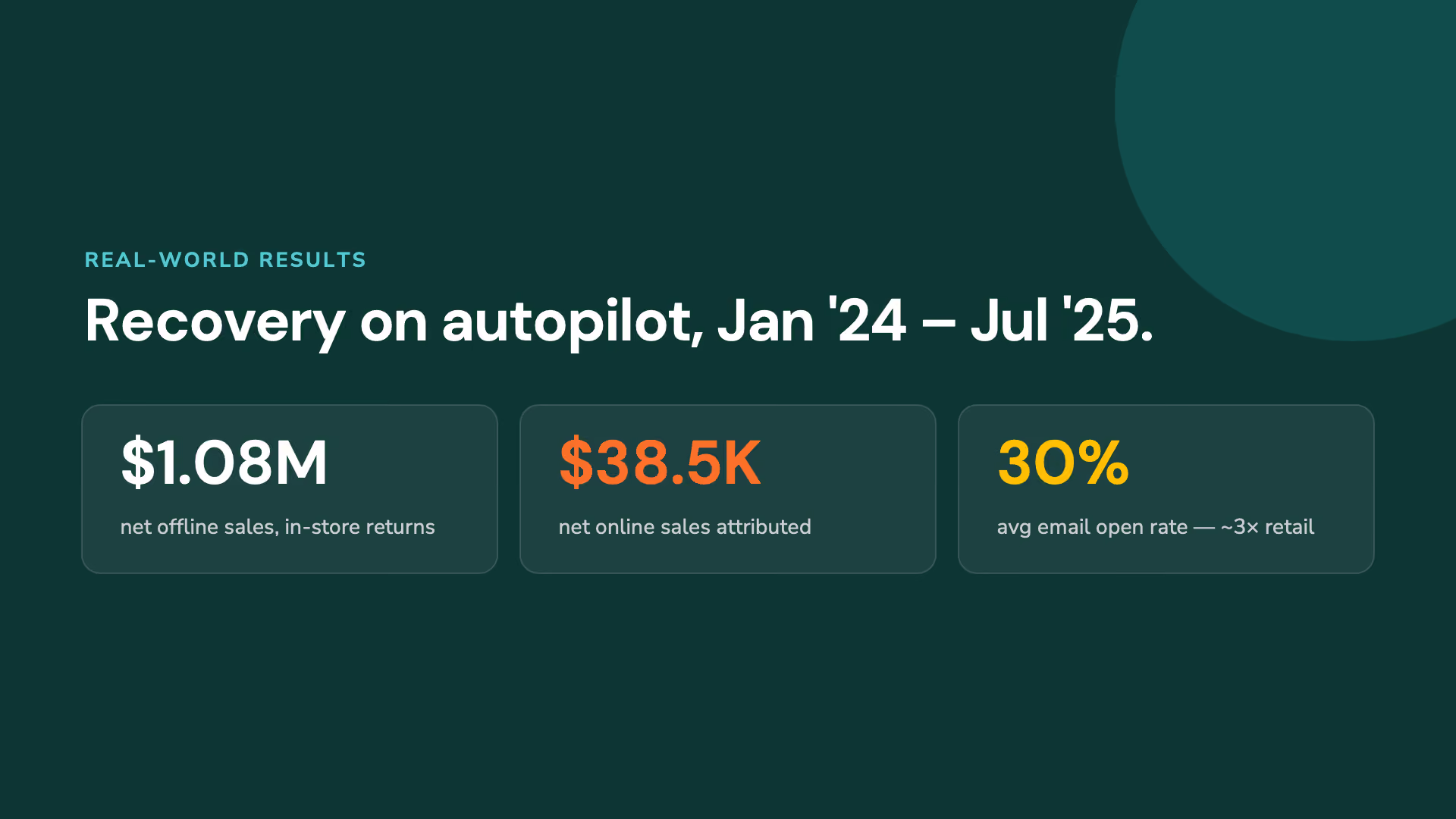
Between January 2024 and July 2025, this dispensary saw measurable performance:
- 30% average email open rate – nearly triple typical retail benchmarks
- 4% click-through rate with direct online purchases following clicks
- $38.5K in net online sales attributed to abandoned cart recovery
- $1.08M in net offline sales from customers who returned in-store after receiving follow-ups
- $78.76 average online purchase value
- $68.56 average offline purchase value
These results show that abandoned cart recovery didn’t just drive online conversions, it meaningfully influenced in-store behavior as well.
Impact
For this dispensary, abandoned cart automation became a consistent revenue driver.
Instead of losing high-intent shoppers, they were able to:
- Recover transactions automatically
- Increase total online revenue
- Drive measurable in-store return visits
- Maintain strong average order values
- Capture both direct and indirect attribution
Because Sweed’s POS, eCommerce, loyalty, and marketing operate within one unified ecosystem, the data powering these workflows was real-time and accurate.
Closing: From Missed Opportunity to Predictable Revenue
While abandoned carts are often seen as lost interest, they typically signal interrupted intent, and an opportunity to win back business with speed, personalization, and system integration.
What used to be a silent revenue leak becomes a reliable, automated growth channel running in the background, converting “almost” into actual revenue every day.
With Sweed, you convert customers without chasing them, automatically and at scale.
Book a demo to see the platform in action.


-Cannabis-Retail-Dispensary.svg)
%201.svg)